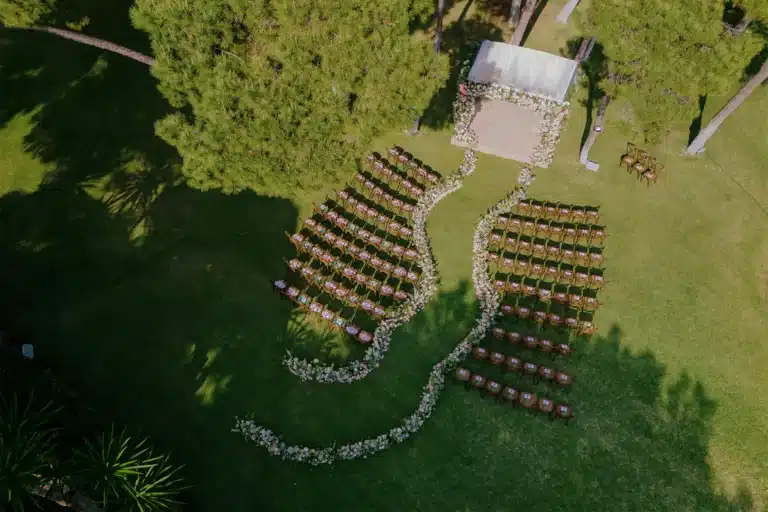
Getting married in Spain is legally possible for UK couples, but a Spanish civil wedding requires one of you to be a Spanish national or to live in Spain. That rule leaves most British couples with two workable options: a Catholic church wedding, which Spain recognises without residency, or a short legal signing at a UK register office followed by a symbolic ceremony in Spain. The second route costs well under £200 in statutory fees in England and Wales and lets you hold the ceremony wherever you like. The sections below cover each route, the paperwork, a working timeline, typical costs and the months that suit a wedding on the Costa del Sol.
At a glance
- Spanish civil wedding: only if one of you is Spanish or lives in Spain.
- No residency? Choose a Catholic church wedding or a UK signing plus a symbolic ceremony in Spain.
- UK legal fees: around £170 at a typical English council.
- Best months in Marbella: May, June, September and early October.
In this guide
Can You Legally Get Married in Spain as a UK Citizen?
The UK government’s guidance on getting married in Spain is direct: you or your partner must live in Spain or be a Spanish national. Spanish civil weddings take place before a civil registry (Registro Civil), a town hall or a notary, and the registry handling your file needs proof of where you live. Several established guides for British couples cite two years of legal residence as the threshold registries apply for a civil ceremony.
If neither of you lives in Spain, the civil route closes. A holiday stay, however long, does not count as living there.
Couples who do qualify through residence need more paperwork than at home. From 3 February 2025, the British Consulate-General in Madrid accepts applications for a certificate of no impediment (CNI) online only. If you live in the UK, you first obtain a UK CNI from your register office and then exchange it online for a Spanish-issued one, because Spanish authorities accept only a CNI issued in Spain. Each affirmation form must be notarised separately by a notary in Spain.
Spain legalised same-sex marriage in 2005, and the residency rule is the same for every couple.
Three Ways to Get Married in Spain, Compared
Every decision about how to get married in Spain follows from the route you take, so settle it before you book a venue.
| Route | Who it suits | Legally binding? | Where the ceremony happens | Paperwork lead time |
|---|---|---|---|---|
| Spanish civil wedding | One partner is Spanish or lives in Spain | Yes, in Spain and the UK | Civil registry, town hall or notary | Several months: CNI, apostilles, sworn translations |
| Catholic church wedding | At least one partner is a baptised Catholic | Yes, the parish registers it civilly | A consecrated church | Start at least 6 months ahead |
| UK signing plus symbolic ceremony | Most UK couples | Yes, through the UK signing | Anywhere: garden, beach terrace, private villa | Give UK notice at least 29 days before the signing |
Which legal route fits you?
Answer two questions to see your options.
The Usual Route: Legal Signing in the UK, Symbolic Ceremony in Spain

Most British couples getting married in Spain from the UK take this route. You complete the legal part at home with a short register office ceremony, then hold the wedding your guests travel for in Spain, with no legal constraints on place, wording or officiant.
In England and Wales the steps run like this, according to GOV.UK’s notice rules:
- You give notice at your local register office after living in that registration district for at least 7 days.
- Notice must go in at least 29 days before the ceremony, and the ceremony must happen within 12 months of giving notice.
- You book a statutory ceremony at the register office and bring two witnesses.
Fees vary by council. At Cheshire East, for example, notice costs £46.50 per person on a weekday, the statutory register office ceremony costs £62 and a certificate costs £12.50. That totals around £170 for the legal marriage. Scotland and Northern Ireland run separate systems with their own notice rules, so check with National Records of Scotland or nidirect if you live there.
Couples split on timing. Signing a week or two before you fly gets the legal step done, so the day in Spain is free for the celebration. Signing after you return also works, but your legal anniversary then falls after the wedding your guests attended.
The symbolic ceremony is where you get the freedom. A celebrant writes it with you, it can run in English, and you can hold it in a garden or by the sea. A beachfront wedding villa in Marbella lets you host the ceremony, dinner and party in one private place, with your closest guests staying on site.
A Catholic Church Wedding in Spain
A Catholic wedding is the one way for non-resident couples to marry legally in Spain. At least one partner must be Catholic, and you build the file through your home parish and the parish in Spain.
Expect to provide baptism certificates, proof of a pre-marriage course and permission from the relevant diocese, alongside passports and birth certificates. Age in Spain and Wise both advise starting at least six months before the date.
Plan the logistics around the church. Your reception venue will sit elsewhere, so you need transport for guests between the two and a church slot that leaves time for photographs before sunset.
Paperwork Checklist for Getting Married in Spain
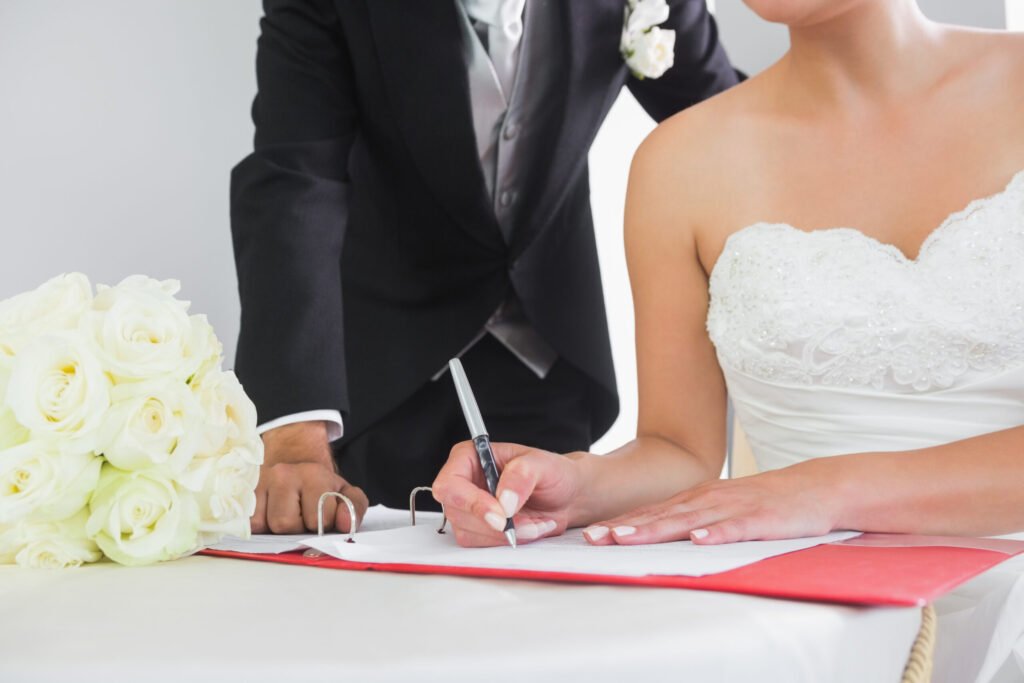
For a civil or Catholic wedding in Spain, start gathering documents early. Your registry or parish confirms the final list, but expect most of these:
- Passports, valid well beyond the wedding date.
- Full birth certificates with an apostille from the FCDO Legalisation Office.
- Sworn translations into Spanish (traducción jurada) of every UK document.
- A Spanish-issued CNI, applied for online through the British Consulate-General in Madrid.
- A decree absolute, final order or death certificate if either of you was married before.
- For Catholic weddings, recent baptism certificates and your pre-marriage course certificate.
Couples tend to lose time on apostilles and translations, because each document needs the apostille first and the translation second. For the UK signing route you need none of this for Spain: your UK marriage certificate is the legal record.
You cannot register an overseas marriage in the UK. The UK usually recognises a marriage as legal if it was valid in the country where it took place, so a Spanish civil or Catholic marriage needs no further UK step.
Wedding Timeline: Working Back From Your Date
The timeline below assumes the UK signing route with a symbolic ceremony in Spain, which is the plan most UK couples follow.
| When | What to do |
|---|---|
| 12 to 18 months before | Fix the date and the venue. Check that the venue can host the ceremony, dinner and dancing, and whether guests can sleep there. |
| 9 to 12 months before | Book the planner, celebrant, photographer and caterer. Send save-the-dates with the nearest airport and suggested dates to fly. |
| 6 months before | Reserve hotel rooms for guests who will not stay at the venue. Catholic couples start the church file now. |
| 2 to 3 months before | Give notice at your UK register office (it stays valid for 12 months) and book the statutory ceremony. |
| 4 to 6 weeks before | Final guest numbers, seating plan, airport transfers and the order of the day. |
| Week of the wedding | Sign at the register office, then fly out to Spain. |
How Much It Costs to Get Married in Spain

The legal part is the cheapest line: around £170 at a typical English council for the UK signing. The celebration is where the budget goes. Wise’s guide to wedding costs in Spain gives these Spain-wide ranges:
| Item | Typical range in Spain |
|---|---|
| Venue | €2,000 to €20,000 |
| Catering | €70 to €150 per guest |
| Wedding planner | €2,000 to €7,000 |
| Photography | €1,500 to €6,000 |
| Flowers and decoration | €1,000 to €8,000 |
| Music | €1,000 to €5,000 |
Catering scales with every guest, so your guest list moves the total more than any other decision. Try your own numbers below, then ask suppliers to quote for your exact month: peak-season dates in July and August book first.
Wedding budget estimator
Uses Wise’s Spain-wide ranges. Excludes flights, guest accommodation and UK legal fees.
About €192 to €533 per guest
Accommodation changes the maths for a group. With a venue that also sleeps your closest guests, the venue fee and part of the accommodation become one cost, and you avoid shuttling the wedding party between hotel and venue.
The Best Months for a Wedding in Marbella

May, June, September and early October suit an outdoor ceremony on the Costa del Sol. July and August average highs of around 30°C, which makes a mid-afternoon ceremony hard on guests in suits.
Light shapes the schedule. Marbella’s latest sunset in 2026 falls on 28 June at 21:41, so a June ceremony at around 19:00 gives you golden-hour photographs and a dinner that starts at 21:00, which matches the Spanish rhythm. In mid-October the sun sets at around 19:40, and once the clocks go back at the end of the month it sets at around 18:30, so autumn ceremonies move earlier.
For a closer look at early summer, the guide to Marbella in June covers weather, local events and what the town feels like that month.
Getting Guests to Marbella and Where They Stay

Most UK guests fly into Málaga Airport. Villa El Rincón sits on Marbella’s Golden Mile, 52 km from the airport, about 2 km from the town centre and 5 km from Puerto Banús. The full breakdown of flights, trains and transfers is in the guide on how to get to Marbella.
For a wedding of 30 or fewer, an exclusive-use estate can house everyone. Villa El Rincón has 15 guest bedrooms across a main house, guest house and pool house, sleeping 30 guests, with a main dining room that seats 18 and seafront gardens on an 11,800 m² plot. The bedroom-by-bedroom capacity page shows how the rooms split between the houses.
Larger weddings need a second base for extra guests. The guide on where to stay in Marbella compares the Golden Mile, the old town and Puerto Banús, and the best beach clubs in Marbella work well for a welcome lunch or a day-after recovery.
Getting Married in Spain: Questions UK Couples Ask
Can I get married in Spain as a UK citizen?
Yes, but a Spanish civil wedding needs one of you to be a Spanish national or to live in Spain. Without residency, your options are a Catholic church wedding or a legal signing in the UK followed by a symbolic ceremony in Spain.
Is it cheaper to get married in the UK or Spain?
The legal marriage is cheaper in the UK, at around £170 in statutory fees in England. The celebration in Spain costs less only if the guest list shrinks: catering in Spain runs €70 to €150 per guest, so a smaller wedding abroad often costs less than a large one at home.
Do I need to register my marriage in the UK if I get married abroad?
No. You cannot register an overseas marriage in the UK, and the UK usually recognises it if it was valid in the country where it took place. Keep the official Spanish marriage certificate safe.
What are the steps to getting married in Spain?
Choose your route first. For the UK signing route: give notice at your register office, sign at least 29 days later, then hold your symbolic ceremony in Spain. For a Spanish civil or Catholic wedding: gather apostilled and translated documents, obtain a Spanish-issued CNI and open your file with the registry or parish.
Is a symbolic wedding ceremony in Spain legally binding?
No. A symbolic ceremony carries no legal weight on its own, which is why couples pair it with a legal signing at home. In return, you can hold it anywhere and write it any way you want.
How far ahead should we plan a wedding in Spain?
Allow 12 to 18 months for a summer wedding so you can secure the venue and key suppliers. Catholic couples need at least six months for the church file, and UK notice can go in up to 12 months before the signing.
Planning a Wedding on the Costa del Sol
If you want the ceremony, dinner and your closest guests under one roof by the sea, see the wedding villa page for Villa El Rincón for ceremony spots and layouts, or send the team your dates and guest numbers to check availability.