

There are a thousand guides to holidays on the Costa del Sol. Most of them were written by someone who spent three days at a Benalmádena all-inclusive and called it research. This one wasn’t.
We live here. We eat here. We know which beach clubs charge €28 for a gin and tonic and which chiringuito will bring you the best espeto of your life for four euros. And we know that the Costa del Sol in 2026 is a very different place to the Costa del Sol that British tourists first discovered in the 1960s — mostly for the better, and in some ways you should probably know about before you book.
So let’s get into it.
Why the Costa del Sol still delivers in 2026
People keep predicting the end of the Costa del Sol. Too developed, too touristy, too expensive, too crowded. They’ve been saying it for thirty years. The numbers tell a different story.
2024 was the best tourism year in the history of the Costa del Sol. The region welcomed 14.47 million visitors — a new all-time record — generating 22 million overnight stays, up 3% on the previous year. Revenue per hotel room in Marbella reached €298.60, the highest average daily rate of any city in Spain. The UK remains the single largest international market, with 1.18 million visitors in 2024, up 7.2% on the previous year.
That growth isn’t happening by accident. The coast has invested heavily in quality. Nearly 80% of hotels have been refurbished in the last fifteen years. The restaurant scene has matured dramatically — Marbella alone has more high-end dining options than many European capitals. The beach club culture, once a novelty, is now genuinely world-class.
But the most honest reason the Costa del Sol keeps winning? The fundamentals are unbeatable. The Mediterranean in July. Andalusian food cooked properly. 320 days of sunshine a year and 161 kilometres of coastline. A pace of life that still hasn’t been completely bulldozed by the algorithm economy. These things don’t go out of fashion.
Best resorts for your Costa del Sol holiday — an honest breakdown
The Costa del Sol runs for 161 kilometres from Nerja in the east to Estepona near Gibraltar in the west. Not all of it is the same, and where you base yourself makes a significant difference to the kind of holiday you have.
Marbella
Luxury · Lifestyle · Couples
The glamour capital of the coast. Stunning old town, the Golden Mile, Puerto Banús on your doorstep, and the best hotel and restaurant density anywhere on the coast. More expensive than everywhere else and, in our view, worth it.
Estepona
Authentic · Relaxed · All types
The one everyone forgets until they go, and then can’t stop talking about. Still genuinely Andalusian — beautiful flower-lined streets, excellent beaches, no pretension. The best-value option on the western coast.
Málaga City
Culture · Food · City breakers
Birthplace of Picasso, home to one of Spain’s most exciting tapas scenes, and a beautiful cathedral. The city has transformed completely in the last decade — it’s a genuine destination now, not just a transit hub.
Nerja
Charm · Views · Slower pace
Eastern end of the coast. Whitewashed, quieter, genuinely beautiful. The Balcón de Europa terrace has views that stop you mid-sentence. Less developed than everywhere else — increasingly popular with people escaping everywhere else.
Benalmádena
Family · Accessible · Value
A solid, dependable choice for families. The marina is lovely, Tivoli World keeps kids entertained, and you’re a short drive or train ride from everywhere else. Not glamorous, but reliably delivers on the basics.
Fuengirola
British-friendly · Budget · Groups
Still flying the flag for the classic British Costa del Sol holiday. Good-value accommodation, plenty of familiar food options, lively nightlife. The local Tuesday market is genuinely excellent. Better than its reputation.
📍 Local tip
If you’re torn between Marbella and Estepona, split your stay. They’re 30 minutes apart on the A-7. Two or three nights in each gives you the contrast — the glamour and the authenticity — without having to choose.
Marbella: the real picture
Let’s give Marbella its own section, because it deserves one and because it’s the place people have the most misconceptions about.
Yes, it’s expensive compared to the rest of the coast. Yes, there are Ferraris and €30 cocktails at Ocean Club. Yes, Peter Andre and Simon Cowell have been photographed here. None of this is the full story, and none of it should put you off.
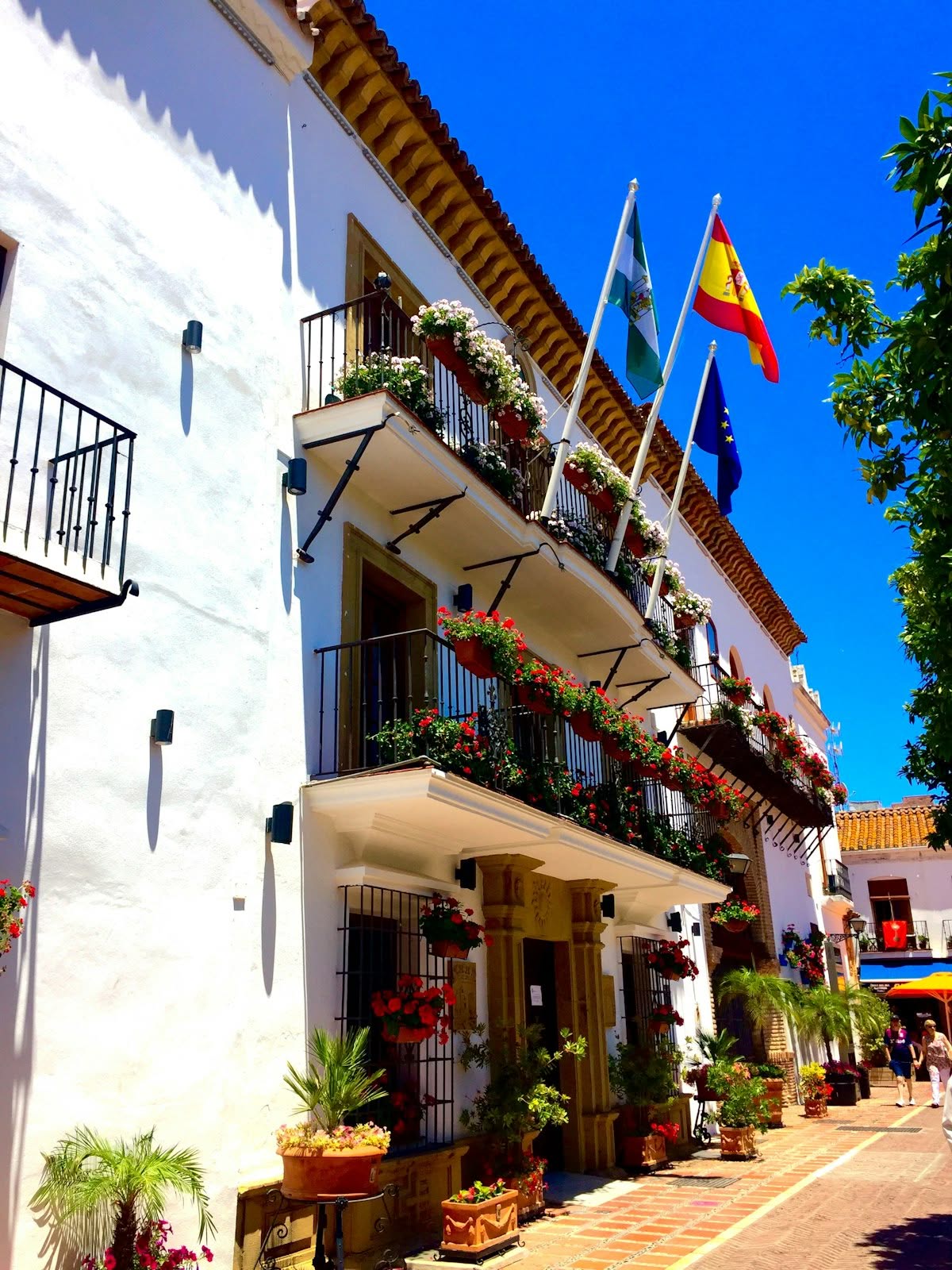
The Marbella old town (casco antiguo) is one of the most beautiful in Andalusia. Narrow whitewashed streets, geraniums spilling over balconies, the Plaza de los Naranjos with its orange trees and outdoor cafés — this is the Spain that photographs make look like a postcard and that looks, in real life, better than the postcard. And the tapas bars here charge old-town Málaga prices, not beach club Marbella prices.
The Golden Mile — the stretch of coast between central Marbella and Puerto Banús — is where the five-star hotels sit. Puente Romano, with its village-within-a-hotel architecture and the best tennis academy in Spain. The Marbella Club, which opened in 1954 and still sets the standard. Many open their beach clubs and restaurants to non-guests, which is worth knowing.
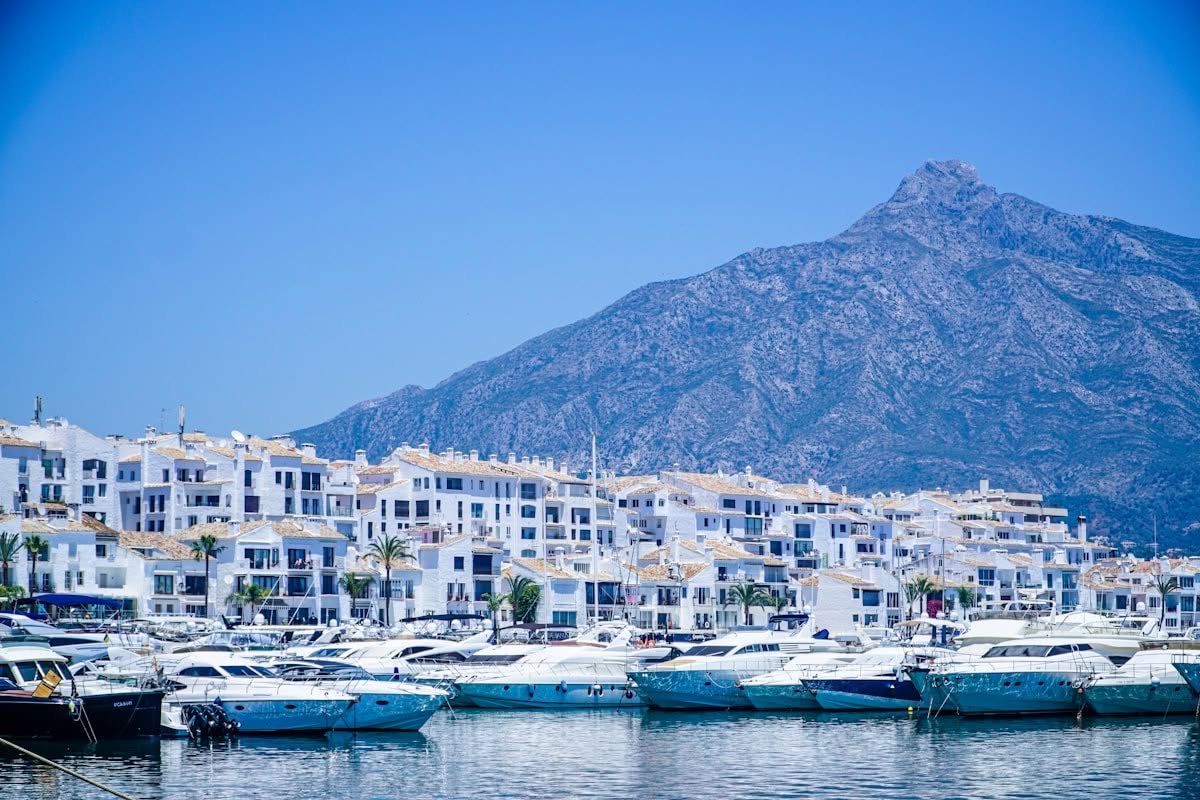
Puerto Banús is exactly what it looks like — a marina full of very large yachts, very expensive boutiques, and very confident people. It’s also a legitimate spectacle. The evening walk along the marina front, with the boats lit up and a drink in hand, is one of those experiences that’s hard to replicate anywhere else. You don’t need to own a yacht to enjoy it.
⭐ The Marbella data point worth knowing
In 2024, Marbella’s average hotel daily rate (ADR) reached €298.60 — the highest of any city in Spain. By July 2025, that figure had climbed to €375.12, with hotel occupancy at 78.5% and a 17% increase in foreign visitors year-on-year. Marbella is not just popular — it’s becoming the benchmark for luxury tourism in Southern Europe.
Best time to visit the Costa del Sol
The honest answer: almost any time. The coast gets 320 days of sunshine a year, and even the coldest months rarely drop below 14°C. But that doesn’t mean all months are equal — and your ideal timing depends on what kind of holiday you’re after.
May, June, September and October are the months the locals recommend to anyone who asks. Warm sea, bearable temperatures, restaurants that are actually pleased to see you rather than processing you through.
July and August are the coast at full volume: beaches packed, energy high, sea at 24°C. If you want the full summer atmosphere, that’s when to come — just know what you’re choosing. Prices in peak season are typically 20–40% higher than the shoulder months.
One specific recommendation: the Starlite Festival runs from June through September in Marbella, bringing major international artists to an open-air quarry setting above the city. It’s a genuinely spectacular event and a good reason to time your visit for early summer.
What a Costa del Sol holiday actually costs in 2026
The Costa del Sol is “it depends” territory — but “it depends” without context isn’t useful. Here’s what you’re looking at across the main categories, with real numbers.
💡 Cost-saving tip
The menu del día (set lunch) is the best-value meal in Spain. Three courses, bread, drink and coffee for €12–16 at most restaurants on the coast. Make lunch your main meal, go lighter in the evening, and you can eat very well without the dinner bill surprising you.
Food, drink and what to order
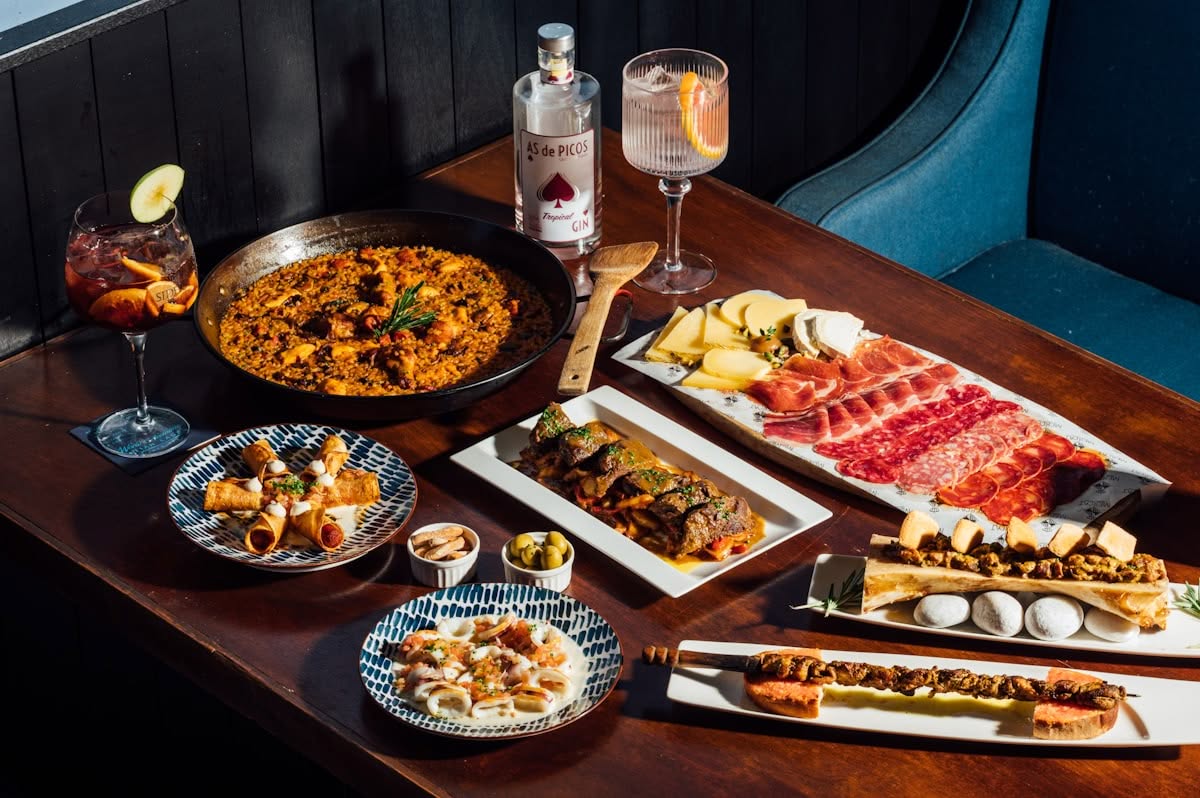
Andalusian food is not the food you get at British-run restaurants on the seafront. It’s one of the great regional cuisines of Europe, and the Costa del Sol is one of the best places in Spain to eat it properly.
The things you must eat
Espetos. Sardines skewered on a reed and grilled over an open wood fire on the beach. You’ll find them at chiringuitos all along the coast. Order a ración, get them with a cold beer, and eat them with your fingers. This is the essential Costa del Sol meal.
Pescaíto frito. Mixed fried fish — anchovies, squid, prawns, whatever the boat brought in. The batter should be light, the oil should be fresh, and the result should crunch. Fuengirola’s old town has some of the best on the coast.
Gazpacho and salmorejo. Cold tomato soups that sound unimpressive and taste extraordinary when made with good tomatoes. Salmorejo (the Córdoba version — thicker, topped with jamón and egg) is slightly harder to find but worth seeking out.
Gambas al pil-pil. Prawns in sizzling garlic and olive oil, served in a clay pot still bubbling when it arrives. Order bread. Use the bread to finish the oil. Don’t apologise.
Rabo de toro. Oxtail stew, slow-cooked until it falls off the bone. A cold-weather Andalusian classic and the kind of dish that makes you understand why Spanish grandmothers don’t need recipes.
Drinking on the Costa del Sol
Sangria is fine, but tinto de verano (red wine with lemon Fanta) is what locals actually drink in summer — and it’s better. For something local and interesting, look for wines from the Sierras de Málaga denomination. The white wines in particular have improved dramatically in the last decade.
At beach clubs and hotel bars, gin and tonic is the premium drink of choice. Spanish gin culture is serious — expect good bottles, quality tonic, and appropriate garnishes. Expect €12–28 depending on where you are.
Beaches worth knowing about
161 kilometres of coastline means there is no shortage of beach. We have a full guide to the best Marbella beaches if you want to go deeper, but here are the highlights.
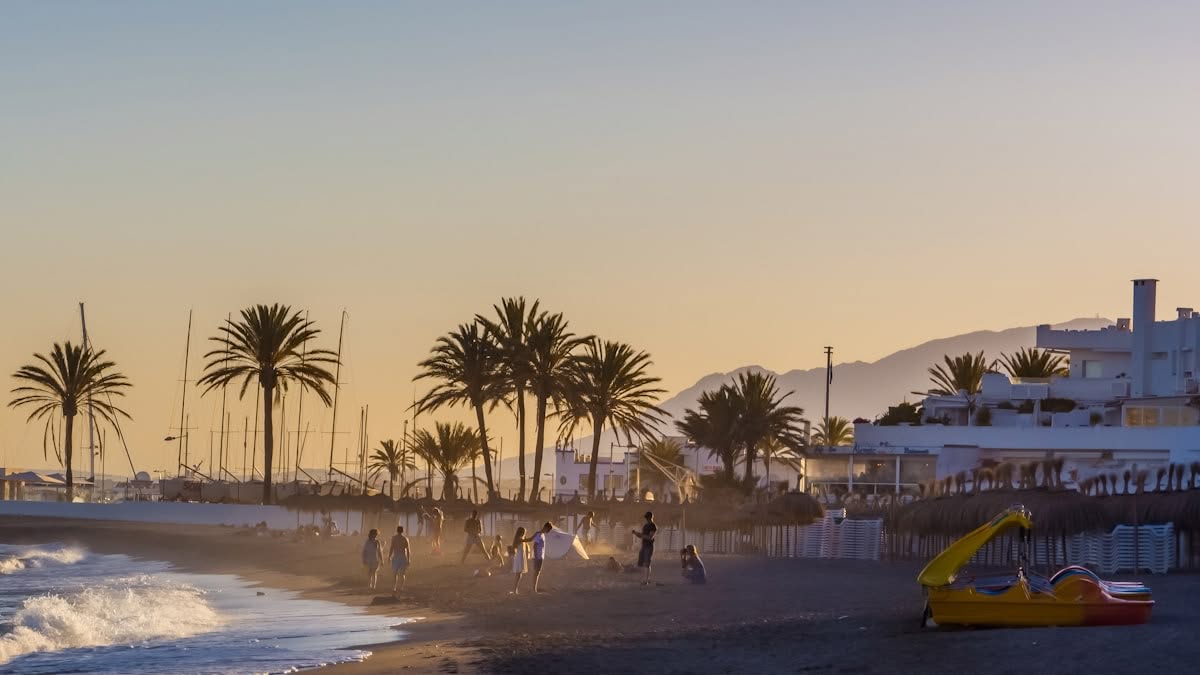
Playa de Nagüeles — Marbella Golden Mile
Long, well-maintained, with the five-star hotels and mountains as a backdrop. Access to several good beach clubs without the full Puerto Banús circus.
La Rada — Estepona
Wide, shallow water, excellent facilities, not overly crowded. The esplanade behind has good chiringuitos and the town centre is two minutes’ walk.
Playa de Maro — near Nerja
A small cove backed by cliffs, accessed via a steep path that keeps the crowds manageable. Absolutely beautiful.
Playa de Levante — Puerto Banús
The celebrity beach. Shallow, warm, pristine, backed by the Nobu Hotel. You’ll share your sunbed with people who take swimwear very seriously.
Senda Litoral — Estepona to Marbella
A coastal path running in completed sections along the entire coast. Genuinely underused by tourists and one of the most beautiful walks on the southern coast of Spain.
📍 Local tip
Most of Marbella’s busiest beaches are manageable if you arrive before 10am or after 5pm. The Spanish head to the beach in the afternoon — which means mornings are genuinely peaceful, even in August.
Beyond the beach: what else to do
The Costa del Sol’s reputation is so beach-heavy that it undersells everything else. Here’s what’s worth doing when you’re ready to leave the sunbed.
Day trips worth making
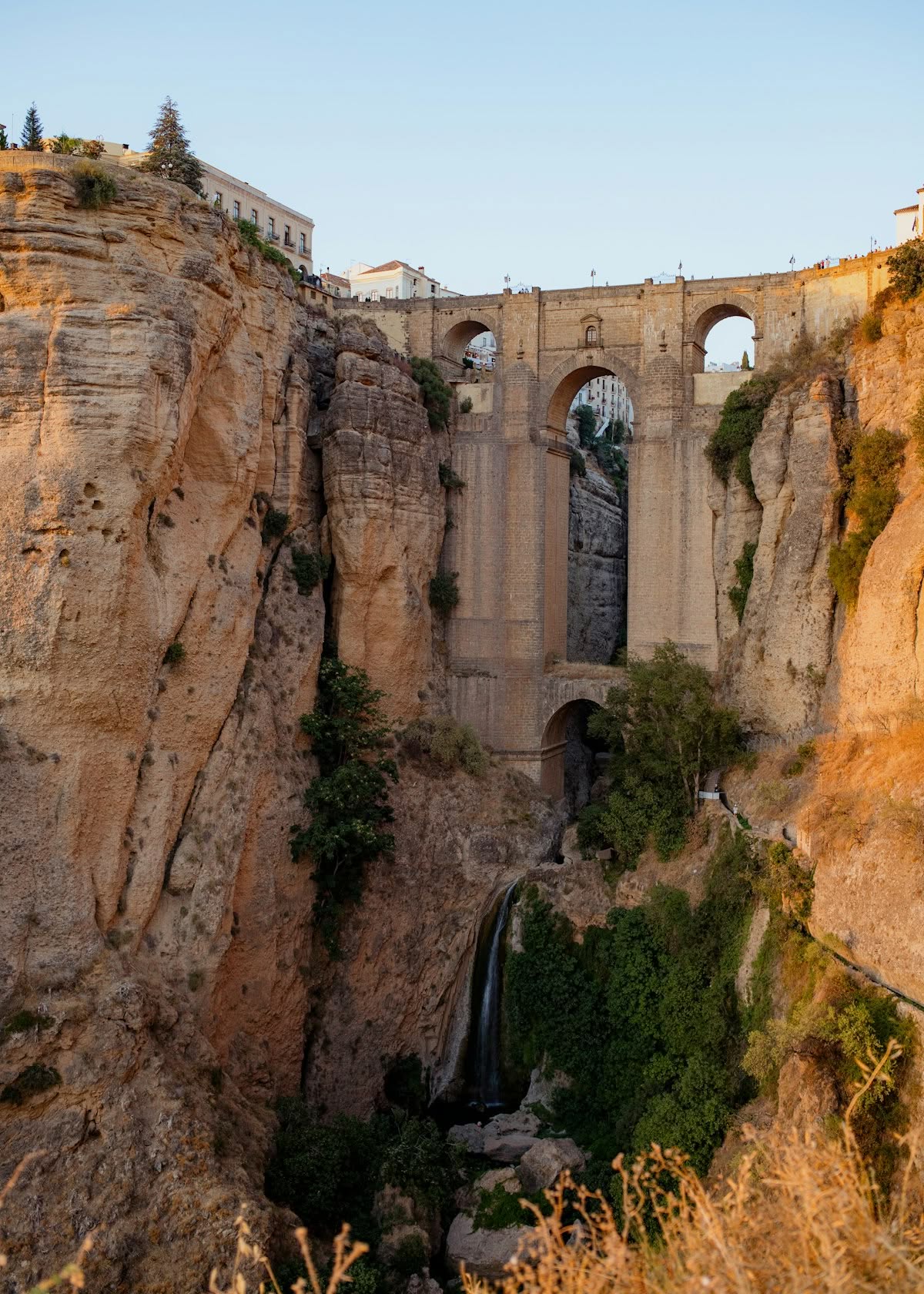
Ronda. One of Spain’s most dramatic towns, perched on a gorge 750 metres above sea level, about an hour from Marbella. The views from the Puente Nuevo bridge are the kind that make you understand why Hemingway and Orson Welles chose to live nearby. Go early, before the coach tours arrive.
Gibraltar. An hour west. Technically British, politically complicated, practically fascinating. The Rock, the Barbary macaques, and views across to Morocco — it’s unlike anywhere else in Europe. Take your passport.
Málaga city. The Picasso Museum (the world’s second-largest collection of his work), the Alcazaba fortress, and one of Spain’s most exciting contemporary food scenes. The city has had a cultural renaissance in the last decade. Half a day minimum.
Golf
The Costa del Sol has over 70 golf courses — more than anywhere else in Europe, which is why it’s sometimes called the Costa del Golf. Valderrama hosted the Ryder Cup. Aloha, Las Brisas and Los Naranjos are all within minutes of Marbella. The mild winter climate makes this one of the world’s great golf destinations from October to April, when courses are quiet and green fees are lower.
Events and festivals
The Semana Santa (Holy Week) processions in Málaga and Marbella are among the most impressive in Andalusia — solemn, beautiful, and genuinely moving. The Feria de Málaga in August is a ten-day party that takes over the entire city and is one of the great public celebrations in Spain. The Starlite Festival (Marbella, June–September) brings international artists to an open-air quarry setting above the city.
Getting there and getting around
Flying: Málaga airport (AGP) is the main gateway, served by most UK airports including Heathrow, Gatwick, Manchester, Birmingham, Edinburgh and Bristol. Flight time is approximately 2.5 hours. easyJet, Ryanair, British Airways and Jet2 all operate regular routes. For all transfer options, see our guide on how to get to Marbella.
Taxi from Málaga airport: Approximately €50–70 to Marbella (fixed rates are displayed in taxis). Journey time around 50 minutes without traffic. Uber also operates from the airport. In peak summer, using the AP-7 motorway (toll, around €5–8) is faster than the A-7 coastal road.
Car hire: Recommended if you want flexibility to reach Ronda, Gibraltar or the quieter beaches. The A-7 coastal road connects everything. Spanish alcohol limit: 0.5g/L (lower than the UK limit).
Train: The Cercanías coastal train connects Málaga to Fuengirola with stops at the airport, Torremolinos and Benalmádena. Cheap, reliable, air-conditioned — excellent for day trips into Málaga city from the eastern resort towns. Note: the line doesn’t extend to Marbella.
Frequently asked questions about Costa del Sol holidays
Is the Costa del Sol worth visiting in 2026?
Yes. 2024 was a record year with 14.47 million visitors and the upward trend has continued into 2025 and 2026. The infrastructure has improved significantly, the hotel and restaurant quality is world-class in places like Marbella, and the fundamental appeal — excellent weather, beautiful coastline, great food — remains entirely intact.
When is the best time to visit the Costa del Sol?
May–June and September–October are the sweet spot: warm temperatures (22–28°C), a warm sea, manageable crowds and prices typically 20–40% lower than peak July–August. July and August are great if you want the full summer atmosphere and don’t mind the crowds. January–March is perfect for golfers and those who want the coast to themselves.
How much does a Costa del Sol holiday cost?
It varies widely. A week in Fuengirola in a 3-star hotel, eating locally, can be done comfortably for £800–1,200 per person including flights. A week in a five-star Marbella hotel with beach club days and restaurant dinners can cost significantly more. The coast accommodates both without either feeling out of place.
Is Marbella suitable for families?
Absolutely. Marbella’s beaches are clean, calm and well-equipped. The old town is pedestrian-friendly and charming for children. Water parks (Aqualand Torremolinos) and Selwo Adventure Park near Estepona are excellent nearby options. Marbella is pricier than other resorts — factor that in if you’re travelling with kids.
How far is Marbella from Málaga airport?
Around 55–65 kilometres — approximately 45–55 minutes by taxi or car in normal traffic. In peak summer, the AP-7 motorway (toll, around €5–8) is faster than the coastal A-7 road. The drive along the coast is genuinely beautiful.
What is the difference between Marbella and Puerto Banús?
Puerto Banús is a marina development about 6 kilometres west of central Marbella, with its own distinct character: luxury yachts, designer boutiques, beach clubs and international nightlife. Marbella itself has the historic old town, the Golden Mile and a more varied character. Most visitors staying in Marbella visit Puerto Banús for at least one evening — they complement each other rather than compete.
Do I need to speak Spanish on the Costa del Sol?
Not for the practical basics — English is very widely spoken in tourist areas, hotels and restaurants. That said, a few words of Spanish (hola, gracias, por favor, una cerveza por favor) go a long way in terms of how warmly locals respond to you.
What is the food like on the Costa del Sol?
Better than its reputation suggests. Traditional Andalusian food — espetos, fresh seafood, gazpacho, excellent tapas — is available at reasonable prices if you step away from the main tourist strips. Marbella has a sophisticated dining scene with multiple high-end restaurants alongside excellent casual options.